
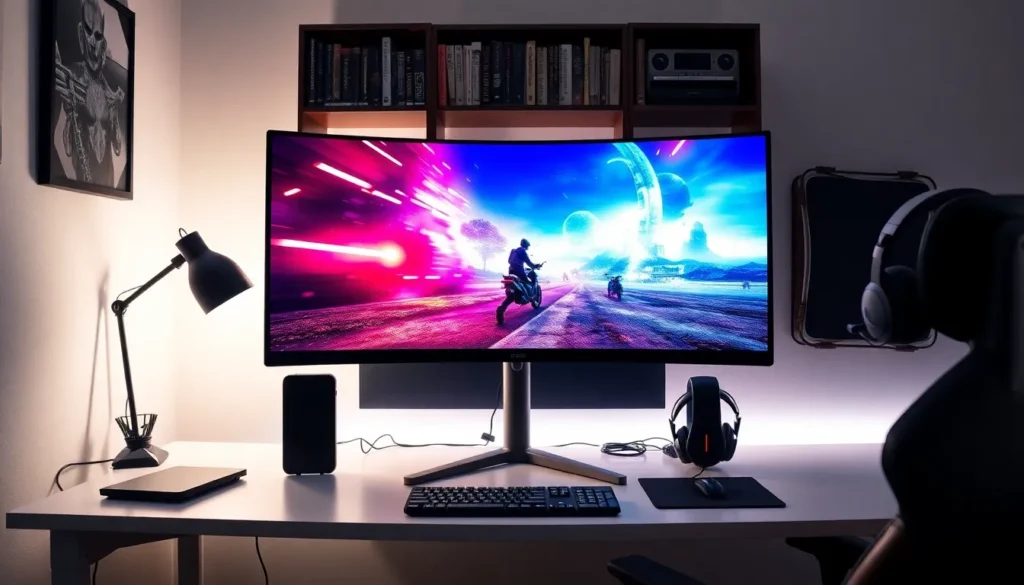
Picture this: you’re immersed in the latest triple-A game, graphics popping from the screen, sounds enveloping you like a cozy blanket, and then it hits you, “Should I upgrade to a curved monitor?” It’s a question that’s plagued gamers more than the final boss in their beloved RPG. Curved monitors, those sleek, head-turning beauties, promise a gaming experience that’s supposed to be better than their flat counterparts. But do they really deliver? Buckle up, because we’re about to dive deep into the world of curved monitors and see if they truly enhance your gaming adventures, or just expensive. Spoiler alert: it’s not all sunshine and rainbows.
Understanding Curved Monitors
Curved monitors have taken the tech world by storm, boasting a design that draws viewers in. Unlike traditional flat screens, these beauties feature a convex shape that wraps around your field of view. This curvature allows for an immersive visual experience, giving your favorite in-game landscapes a new dimension. But how do they work? The idea is simple: by bending the screen, the image stays consistent across all angles, reducing distortion and providing a wider field of view. It’s like strapping yourself into a virtual rollercoaster, where every twist and turn feels natural.
Curved monitors come in various sizes and resolutions, catering to different preferences and setups. Whether you’re a casual gamer or an esports pro, there’s a curved monitor out there for everyone.
Benefits Of Curved Monitors For Gaming
Now, let’s talk perks. Curved monitors offer several advantages that might just make your gaming session feel like a premium experience.
Enhanced Immersion
Curved screens draw you in like a good book you can’t put down. The wrap-around effect creates a sense of depth that can make all the difference when exploring expansive game worlds. Whether you’re flying through outer space or battling it out in a fantasy realm, you might find yourself feeling as if you’re actually in the game.
Reduced Eye Strain
Staring at screens for hours can lead to fatigue, but curved monitors often offer better viewing angles that help alleviate this issue. On a flat monitor, eyes might strain as they struggle to focus on different parts of the screen. With a curve, the eye movement is more natural, promoting comfort during those long gaming marathons.
Improved Gaming Performance
Some gamers swear by the competitive edge Curved monitors can provide. The wider field of view can help detect movements and threats at the edges of your vision, which might be the difference between a well-timed dodge or a costly defeat. This is especially true in fast-paced games where split-second decisions can make or break your performance.
Potential Drawbacks Of Curved Monitors
Not all that glitters is gold, and curved monitors are no exception. Just like that fabulous sale on shoes, there are a few catches to consider before making the leap.
Price Tag
Curved monitors tend to be pricier than their flat counterparts. It’s often due to the technology and manufacturing required for that sleek design. If you’re on a budget, you might want to weigh your options carefully.
Limited Sweet Spot
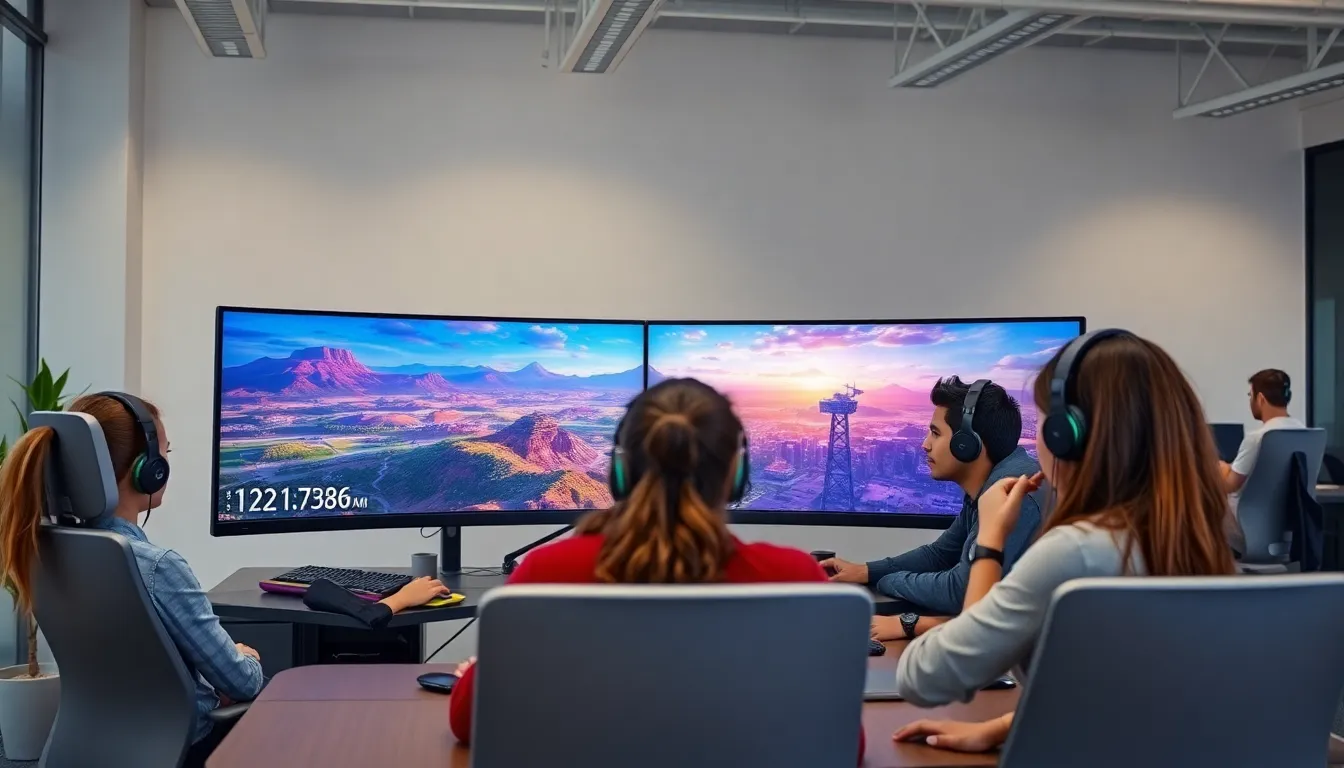
These monitors do boast an immersive experience, but that experience is best enjoyed from a particular angle. If you’re gaming alone, you’re golden, but if friends want to join you, they might miss out on the optimal viewing experience when they sit off to the side. So, it’s good to keep in mind the setup you’re using for these beauties.
Reflection Issues
Curved monitors can sometimes struggle with reflections. If you’re gaming in a bright room, glare may become a nuisance, detracting from that immersive experience. You’ll need to consider your gaming environment before making the big buy.
Comparison With Flat Monitors
So, how do curved monitors stack up against good ol’ flat monitors? Well, it depends on what you’re after.
Visual Experience: Curved monitors provide a greater sense of depth and immersion, which can elevate gaming, particularly for single-player experiences where exploring vast worlds is key. Flat monitors, while certainly good, don’t quite match that enveloping feeling.
Adaptability: Consider flat monitors’ versatility. They typically handle various tasks well, from gaming to productivity to watching movies. Curved screens, while stellar for gaming, might not cater as effectively to multi-tasking or different usage scenarios.
Motion Blur: Many gamers notice less motion blur on curved displays due to their ability to maintain consistent focus across the screen. Flatten out those curves, and you may start seeing blur in peripheral vision during intense action.
Best Practices For Choosing A Curved Monitor
For those convinced a curved monitor could be their next upgrade, here’s how to navigate the market:
Size Matters
Select a model that fits your gaming setup. Bigger isn’t always better, more significant monitors can create a more profound sense of immersion, but they need to sit at the right distance to avoid discomfort.
Resolution and Refresh Rate
Gaming runs smoother with higher resolutions and refresh rates. Opt for at least 1440p resolution and a refresh rate of 144Hz for the best experience. This combo makes everything look crisp and fluid, allowing for top-notch gameplay.
Curvature Radius
Different models feature different degrees of curvature. A curvature of 1800R (the lower the number, the more pronounced the curve) might be ideal for gaming. Experiment with various curves to see which meets your needs and preferences.
User Experiences And Reviews
When it comes to tech, user reviews can be a goldmine of insight, and curved monitors are no exception. Many users rave about how their gaming experience feels enhanced, citing improved immersion and less eye strain.
But, some gamers mention they faced challenges, particularly about reflection issues and the learning curve (pun intended.) for adjusting their seating position. It seems that personal preference plays a significant role in shaping the curved monitor experience. Some love the embracing feel of a curved display, while others feel more comfortable with the predictability of a flat one.
In online forums, users often recommend testing different models before purchasing. Trying out a curved monitor at a local electronics store can help determine if it’s the right fit for individual gaming styles.


